

Why Agentic AI Is the Biggest Shift in Chip Design Since EDA

When the Intel 4004 debuted with 2,300 transistors in 1971, it was considered a Michelangelo-level masterpiece. Fast forward to 2026, the Cerebras Wafer-Scale Engine now packs 4 trillion transistors onto a single wafer-scale chip. A 1-billion-fold increase in complexity.
The semiconductor industry did not achieve that by adding 1 billion more engineers, but successive waves of automation. From CAD to EDA, manual drafting became digital design, visual inspection became simulation, and validation evolved from human reasoning to computational analysis.
But every wave of automation eventually encounters a new complexity wall.
Today, AI accelerators, chiplets, and 3D IC architectures are pushing design complexity faster than traditional EDA tooling can scale. Verification teams now face terabytes of waveform data, millions of design scenarios, and multi-physics, system-level interactions that stretch the limits of traditional, manual workflows.
At the 2026 GSA Tech Summit, William Wang, founder and CEO of ChipAgents, joined industry leaders on the panel "Accelerating Design-to-Fabrication – AI's new frontier?" to discuss why agentic AI represents the next major evolution in semiconductor design.
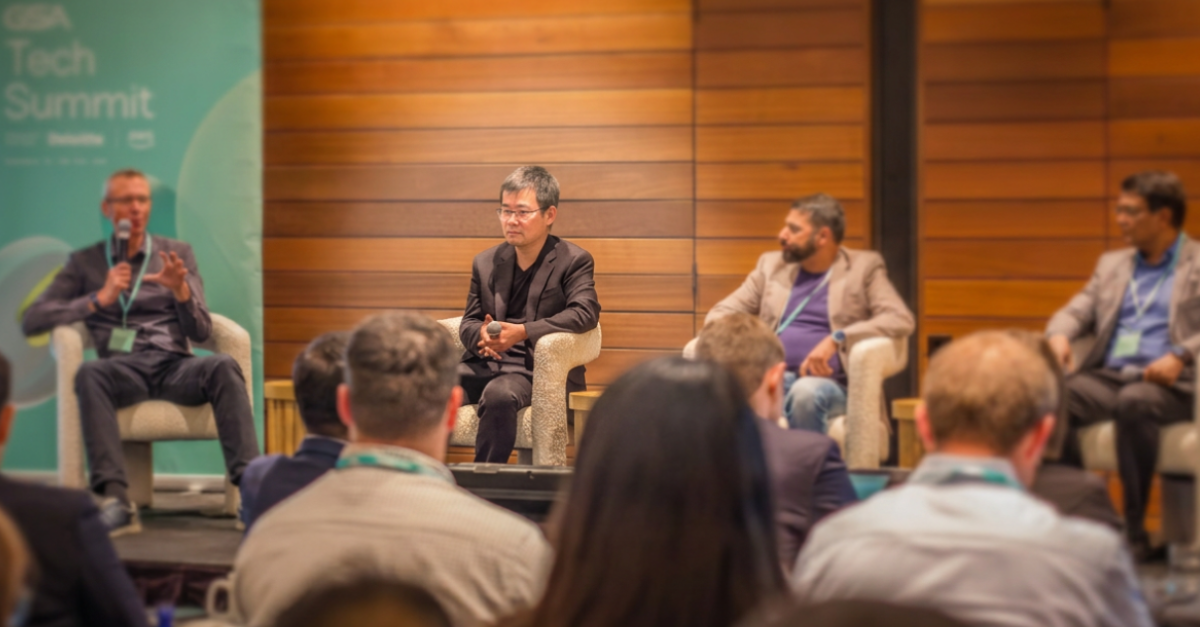
Figure 1. GSA Tech Summit Panel "Accelerating Design-to-Fabrication – AI's new frontier?"
Why AI May Be the Only Way Forward for Chip Innovation
The semiconductor industry is confronting two existential challenges simultaneously: a growing talent shortage and a widening productivity gap.
-
1M+ Semiconductor Talent Gap by 2030. Universities are not producing enough graduates to meet industry needs, while experienced engineers retire or move into adjacent fields. According to a recent Forbes article, there will be a talent gap of over one million semiconductor workers globally within 4 years.
-
1:6 Designer-to-Verification Ratio. Design complexity continues to accelerate with AI systems, advanced nodes, and 3D IC architectures, while verification teams struggle to keep pace. Today, a single designer may require six verification engineers to validate increasingly complex systems. Many of these engineers spend most of their time on repetitive, manual tasks such as waveform analysis, regression triage, testbench generation, and debugging.
Neither can be solved through incremental EDA tooling improvements.
Modern SoCs contain billions of transistors. Chiplets and 3D ICs introduce new layers of system-level interactions. Disciplines that once operated independently, silicon, packaging, thermal, mechanical, and software engineering, must now be optimized together. Traditional scaling approaches, more headcount, or larger verification teams are not keeping up and never will again.
The industry's future depends on orders-of-magnitude improvements in productivity, enabling smaller teams to achieve what once demanded organizations several times their size.
That is precisely the opportunity agentic AI was built for.
What Multi-Agent Orchestration Delivers Today
A single agent is constrained by its context window, operates sequentially, and must generalize across many tasks. Multi-agent systems break work into specialized roles, enabling domain experts to collaborate in parallel across the engineering workflow.
In practice, this translates into measurable productivity gains across the design and verification lifecycle.
Taking ChipAgents as an example, our agents can read and comprehend requirements up to 15× faster than traditional manual reviews. They can also can generate assertions 240× faster and create UVM environments 400× faster, while achieving 100% code and functional coverage. Instead of a single assistant responding to prompts, engineers gain access to an "AI engineering team" capable of decomposing objectives, executing tasks in parallel, and iterating autonomously within defined guardrails.
The Determinism Problem: Where AI Can and Cannot Be Trusted
Chip design is built on deterministic physics. A design either passes signoff, or it fails.
AI, by contrast, is inherently probabilistic. That raises a fundamental question for every engineering organization: Where should AI be trusted, and where must humans remain in control?
The answer depends on the nature of the task.
-
AI agents excel when the search space is large, outcomes can be evaluated objectively, and iterative refinement is acceptable. In verification, workflows such as specification analysis, testbench generation, assertion creation, regression triage, and waveform debugging fit this model well. These are fundamentally search and reasoning problems, where AI can rapidly explore possibilities, identify patterns, and accelerate root-cause analysis.
-
Human checkpoints, however, remain non-negotiable. Pull requests, engineering change orders, timing exceptions, architecture tradeoffs, tapeout signoff, and GDS release all require human accountability. Determining whether a solution reflects the original engineering intent, not merely whether it satisfies a constraint, requires judgment, context, and responsibility. Autonomous agents are also unsuited for open-ended architectural decisions, ambiguous specification interpretation, or situations that depend on project-specific context and institutional knowledge.
For verification teams adopting agentic AI, start with low-risk tasks such as documentation, specification analysis, test suggestions, and regression triage. These use cases deliver measurable productivity gains while allowing engineers to build trust in agents. As confidence grows, introduce formal verification checks and other automated validation mechanisms that serve as guardrails for agent-generated outputs. Once these controls are established, AI agents can be expanded into workflows that modify design artifacts such as RTL. Even then, every change should be accompanied by comprehensive audit trails, provenance tracking, and deterministic reproducibility.
The Token and Infra Cost Equation
Infrastructure and token economics emerged as critical design parameters, not afterthoughts. Deploying AI at scale for semiconductor engineering requires careful orchestration of compute, data, and workflows. Teams must balance CPUs and GPUs, optimize heterogeneous computing resources, and manage the reality that token consumption can grow exponentially as AI-driven engineering workflows expand.
The panelist also emphasized the importance of "Internet-open" ecosystems and strong governance. Semiconductor companies cannot afford to lock themselves into opaque AI environments that are difficult to control. As one panelist noted, the challenge is avoiding a Ferrari architecture for a grocery-store problem.
How Far Are We from Full-Loop Autonomous Design
At the GSA Tech Summit, William and other experts discussed how agentic AI will enable this progressive journey to autonomous semiconductor engineering.
We are already familiar with the first generation of AI where copilots helped engineers generate documentation, write code, create assertions, and bring up IP more quickly. Engineers remained firmly in control while benefiting from faster execution and reduced manual effort.
The second wave moved beyond assistance to execution. AI agents became capable of independently performing well-defined engineering tasks. They could decompose objectives, invoke EDA tools, analyze results, self-correct, and execute workflows such as overnight debugging or verification under predefined safety guardrails.
Today, the industry is entering the era of multi-agent engineering systems. At ChipAgents, we are building specialized AI agents that function as domain experts across the semiconductor workflow. They can collaborate through a shared engineering context, assigning responsibilities, coordinating decisions, and executing tasks in parallel. Rather than interacting with a single AI assistant, engineers gain access to an entire AI engineering team.
Then there is the emergence of autonomous engineering organizations. Multi-agent systems evolve into structured teams with management hierarchies, service-level objectives, coding standards, workflow governance, and accountability mechanisms. This is particularly powerful in verification, where probabilistic AI methods can accelerate analysis and decision-making, but never replace deterministic signoff.
The long-term vision is full-loop autonomous design. An agentic-driven workflow that spans architecture exploration, RTL generation, verification, implementation, signoff, and manufacturing preparation. Human engineers define goals, constraints, and business objectives while AI systems execute most engineering work within auditable and tightly governed boundaries. As William put it, "Our goal is to multiply engineering capacity at a scale previously impossible, enabling smaller teams to tackle exponentially larger designs."
The New Frontier
AI has become EDA's favorite buzzword, but beneath the conference keynotes lies a much deeper reality: the semiconductor industry is confronting a structural crisis. Demand for advanced silicon is accelerating at an unprecedented pace, driven by AI infrastructure, autonomous systems, and increasingly complex compute architectures. Yet engineering productivity is not keeping pace.
As William summarized, "The future of chip design is one human commanding with armies of AIs. And that future is already here. At ChipAgents, specialized AI agents collaborate across specification analysis, RTL development, verification, debugging, and optimization, allowing a team of 40 engineers to achieve the output of 150."
The semiconductor industry has taken leaps of faith before. Each time complexity threatened to outpace human capability, a new layer of automation emerged to move the industry forward. Just as EDA enabled the industry's last billion-fold increase in complexity, agentic AI has the potential to unlock the next billion-fold leap in engineering productivity.
Are you ready to build the engineering organization of the future? See ChipAgents in action.