
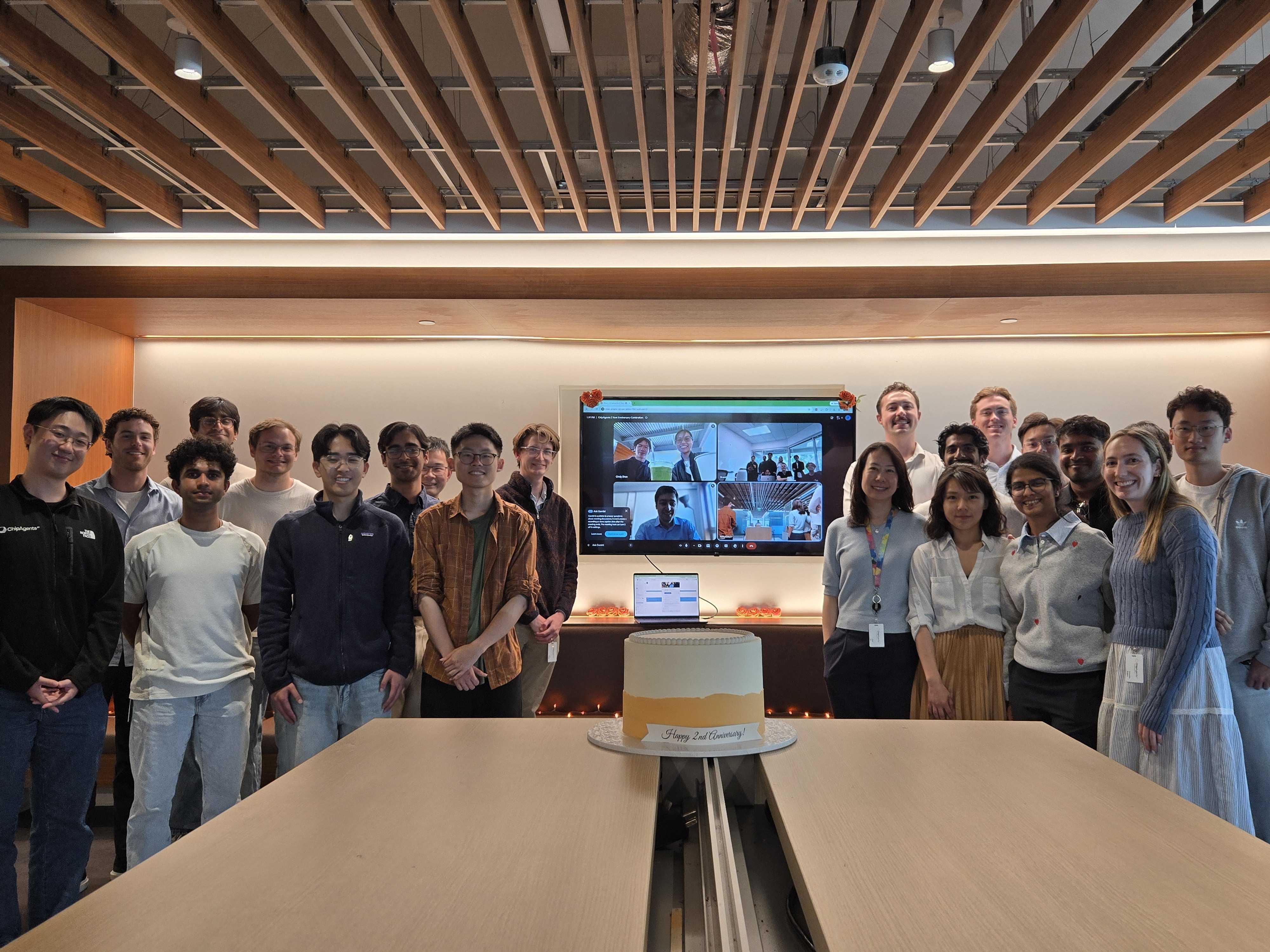
Building the Future of AI-Driven Semiconductor Design: Celebrating 2 Years of ChipAgents

ChipAgents began in a UCSB AI lab.
It started small. A professor. A few students. A 1-trillion-dollar question:
Could AI change how the world's semiconductor is designed?
As today's design moves deeper into the angstrom era, chip design is becoming harder, faster, and less forgiving. More transistors. More system complexity. More verification burden. More pressure to get every decision right before tapeout. A mistake can cost months. A missed bug can cost millions. The old way cannot keep up.
So, the professor and his students started building.
The first agent, the first demo. The first customer call. Then another. Then another…
Two years later, ChipAgents' multi-agent systems serve the top 80 semiconductor companies, autonomously executing RTL design, verification, debug, and many other complex workflows.
In this article, we celebrate ChipAgents' second birthday and share the story behind our journey, how the team found its mission and built its culture.
Why Chip Design Needed a New Kind of AI
Verification has been one of the most notoriously time-consuming and expensive stages of chip design. Modern chips can contain billions of transistors, and verifying every interaction has required massive engineering effort. A typical ASIC design flow spans specifications, RTL, verification plans, simulations, formal tools, coverage models, waveforms, constraints, regressions, timing, power, and signoff.
Several AI startups had tried to introduce LLMs for hardware development, but most were either too general-purpose or lacked integration with existing tools.
The industry needed AI agents built for silicon.
Agents need to understand design intent, read engineering artifacts, operate seamlessly with existing EDA tools, and reason across complex workflows. Productivity gain is not the mere goal, the output must meet timing, power, area, yield, reliability, security, and compliance requirements. And that is the foundation of ChipAgents: domain-specific agentic AI for semiconductor design.
Over the past two years, ChipAgents has grown from a bold idea into a category-defining platform. We empowered hundreds of thousands of engineers to accelerate root-cause analysis, coverage closure, regression triage, and other manual tasks, reducing bottlenecks and bringing more confidence into every stage of the design process.
Bring the Best AI to Semiconductor
ChipAgents builds on more than a decade of AI research.
Our founder and CEO, William Wang, has spent more than a decade working at the edge of artificial intelligence. In 2011, during his PhD at Carnegie Mellon University, he was already exploring recurrent neural network language models, before deep learning became mainstream, and before ImageNet changed the field. Later at UC Santa Barbara, William and his research group continued pushing the boundaries of reasoning and learning. In 2017, they created DeepPath, one of the first deep reinforcement learning frameworks for reasoning over complex knowledge graphs. It showed that neural networks could do more than recognize patterns.
By 2024, the genie had escaped the bottle. AI had matured enough to move beyond research labs and into the world's hardest engineering domains. Semiconductor design was one of them. As William shared during our two-year anniversary celebration, "We cannot find a more important time to revolutionize the semiconductor industry with AI."
Turn the Crank on Innovation
We asked some of our founding engineers to reflect on their ChipAgents journey and what's the most valuable lesson.
Kexun, our Head of R&D, shared that innovation means creating change that has real-world impact. It is the most rewarding experience to build technology that changes how people work and how an industry moves forward.
Mehir, our Head of Engineering, shared another defining lesson from ChipAgents' growth: perspective is a gift. Over the past two years, the team has learned from customers, partners, and semiconductor experts across the industry. Those conversations have shaped our product, sharpened our vision, and kept us focused on what matters most.
David Wang described the journey as going from "zero product to many, many products" designed to transform the industry. All of that came through late-night sessions at the Santa Barbara office (where we started), early morning demos, real customer deployments, and real validation from leading semiconductor teams.
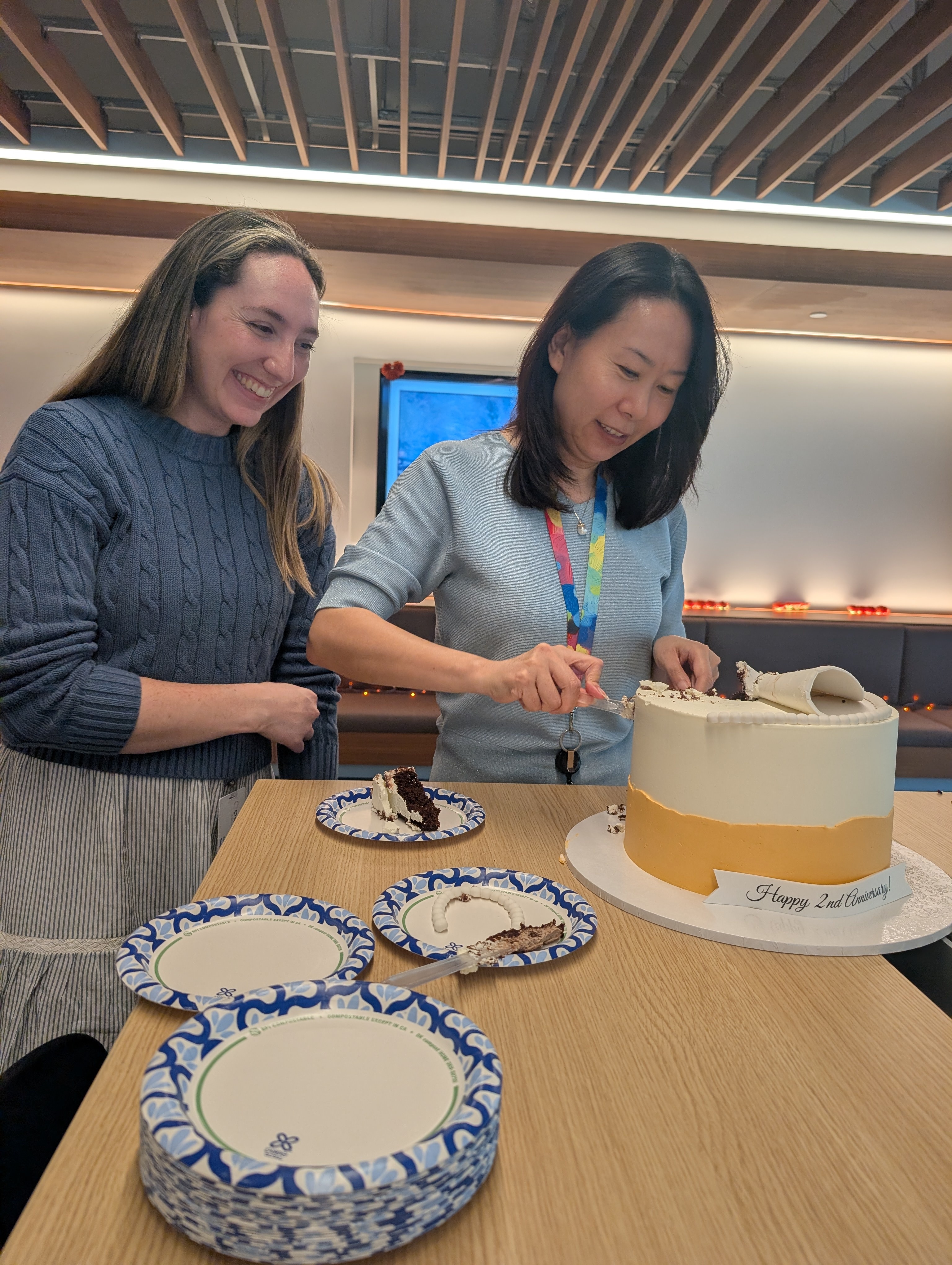
Two years in, ChipAgents is just getting started.
At the celebration, William made it clear that, going forward, ChipAgents would focus relentlessly on building our products to bring orders of magnitude productivity while ensuring quality-of-results. We are deeply grateful to our customers, partners, investors, advisors, and team members who believed early in our mission to transform chip design with agentic AI.