
Multi-Agent Orchestration: The Path to IC Design Autonomy

By now, most semiconductor teams are familiar with using AI agents for individual chip design and verification tasks, from RTL generation and debugging to root-cause analysis. But achieving 10X productivity gains across the ASIC design cycle requires a bigger shift: from point AI agents to multi-agent orchestration across semiconductor engineering workflows. Those agents can explore alternatives in parallel, interact with engineering tools, evaluate results, and present the most promising results back to engineers for review. We are already seeing what this shift can enable. In a recent customer deployment, ChipAgents' domain-specific AI platform helped WhaleChip, a 3D IC company, accelerate 3D IC root-cause analysis from days to just 15 minutes, an early example of what becomes possible when autonomous agents move beyond isolated tasks toward coordinated engineering workflows. Read on to learn why multi-agent orchestration matters, and how it could reshape semiconductor engineering workflows.
Why Point AI Agents Aren't Enough for Semiconductor Design
A senior hardware engineer's job rarely consists of simply writing RTL or running an EDA tool. The hardest work happens across four interconnected layers:
Semantics → Code → Tooling → Physics
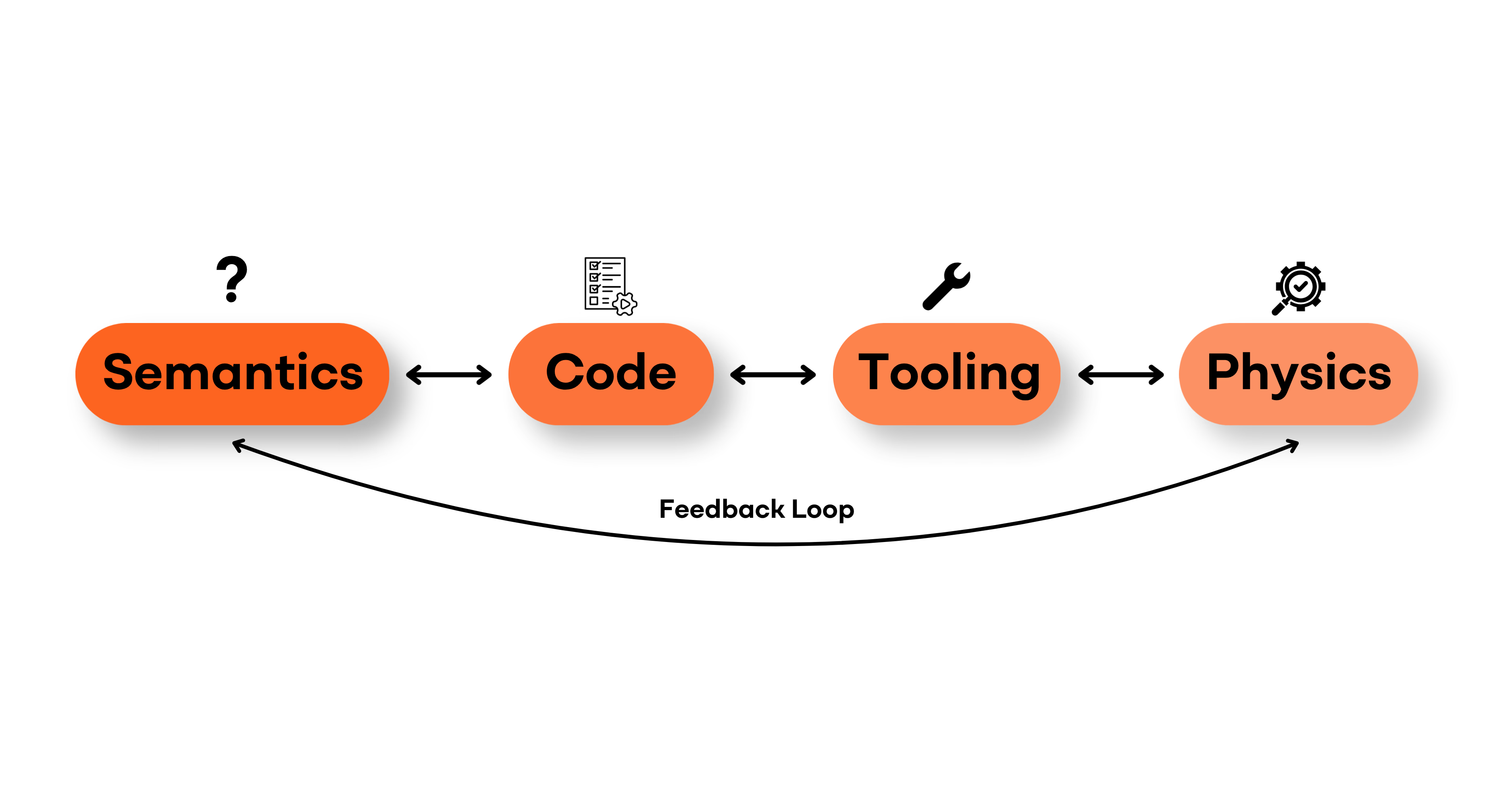
Figure 1. Four interconnected layers of chip design
First, the engineer must understand what the design is supposed to do and form a hypothesis about how to improve it. That hypothesis must then be translated into RTL, scripts, constraints, or another executable form. The implementation must work within complex EDA toolchains, and ultimately, physical results determine whether the original hypothesis was correct. Those results then feed directly into the next engineering decision.
This creates two fundamental bottlenecks. First, individual steps are becoming increasingly expensive and time-consuming as designs grow larger and more complex. Simulations, synthesis, power analysis, or debugging can take hours or even days. Second, and more importantly, the loop itself compounds the delay. Every iteration requires engineers to form a new hypothesis, implement it, configure and run the relevant tools, wait for results, interpret those results, and decide what to try next.
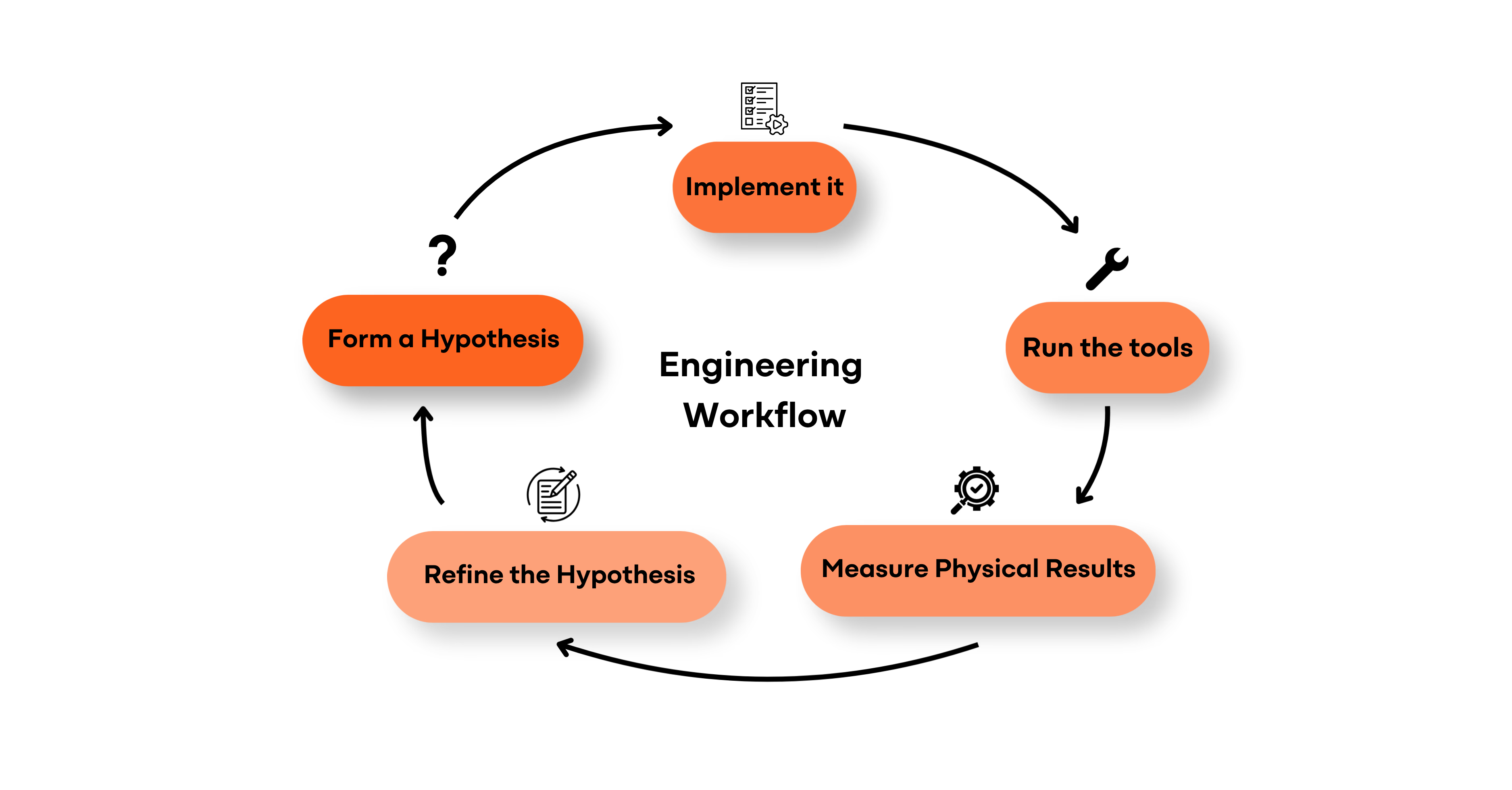
Figure 2. Traditional IC power optimization workflow
Using power optimization workflow as an example, an engineer might:
- Run a power analysis.
- Examine the resulting report.
- Identify potential optimization opportunities.
- Rank those opportunities by expected impact.
- Select the few that can realistically fit within the schedule.
- Implement each change.
- Merge and validate the modifications.
- Rerun the power flow.
- Analyze the new results.
- Repeat.
A point agent can make one part of this process dramatically faster. For example, once an engineer decides to implement a particular clock-gating strategy, an agent may be able to generate the RTL or modify the relevant scripts in minutes. But much of the engineering work still happens before and after that agent is involved. Someone still has to analyze the reports, identify possible opportunities, decide which hypotheses are worth pursuing, determine the appropriate tools and configurations, evaluate the results, and decide what to try next.
That creates a fundamental limit to point acceleration: if one step becomes 10X faster while the surrounding workflow remains sequential, the overall engineering cycle will never become 10X faster.
This is why orchestration matters to compress the loop as a whole. AI agents have already accelerated individual parts of the semiconductor workflow. The next frontier is to coordinate those agents so they can explore multiple hypotheses in parallel, execute the corresponding tool flows, evaluate the outcomes, and continuously narrow the search toward the most promising solutions.
What Is Multi-Agent Orchestration in Semiconductor Design?
Multi-agent orchestration coordinates multiple specialized AI agents across an engineering workflow rather than assigning a single agent to an isolated task. In semiconductor design, these agents can analyze design data, generate hypotheses, modify RTL or constraints, interact with EDA tools, evaluate results, and explore multiple design paths in parallel, with human engineers reviewing decisions at critical points.
Increasing agent reliability changes what engineering teams can do with them.
When an agent has only a moderate probability of successfully completing a task, engineers naturally use it cautiously. But as agents become more capable of converging on individual engineering problems, it becomes practical to dispatch many of them simultaneously.
Instead of testing opportunities sequentially:
Opportunity 1 → Opportunity 2 → Opportunity 3
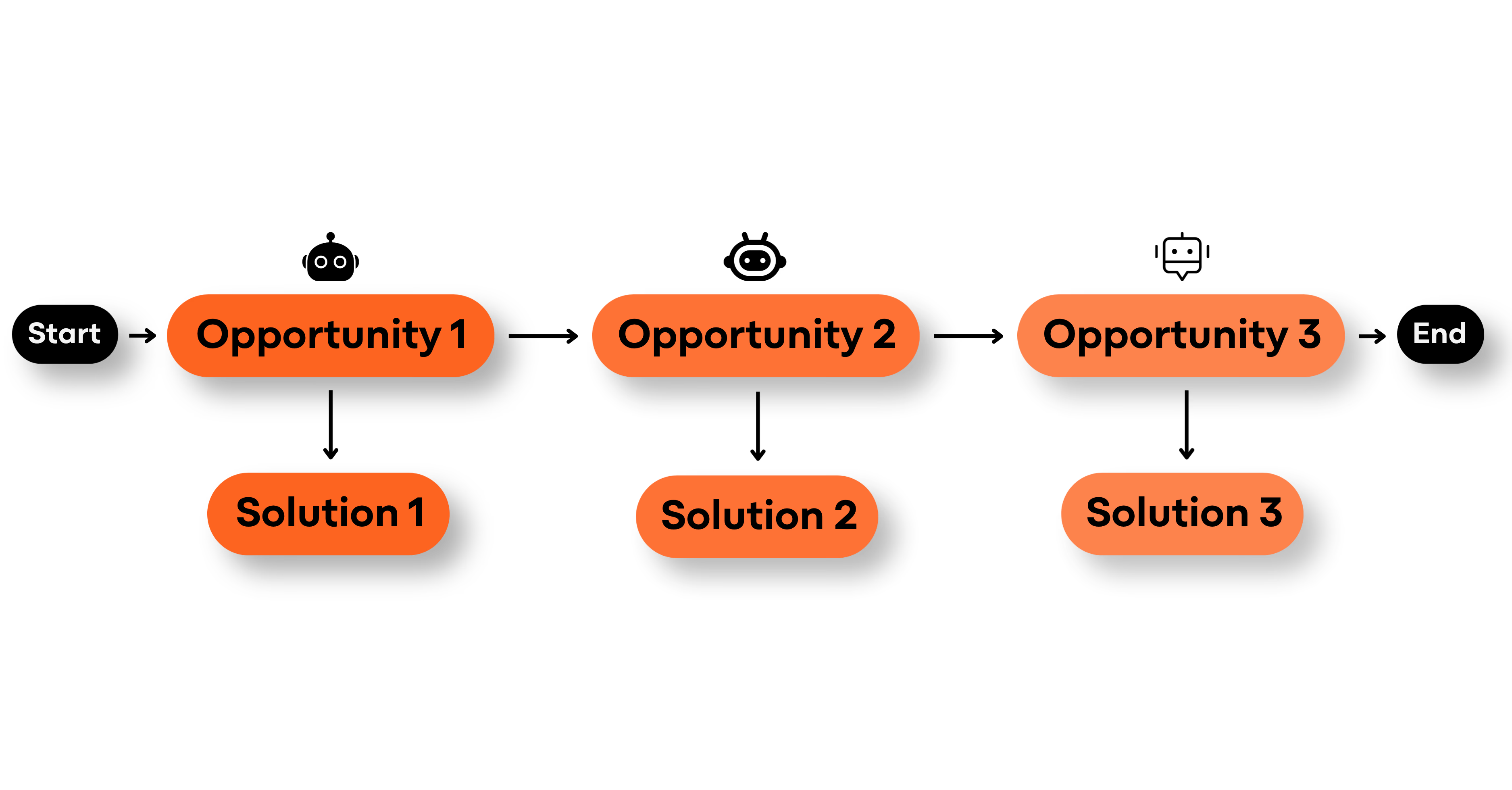
Figure 3. Sequential AI agents for ASIC design
the workflow can become:
Opportunity 1 + Opportunity 2 + Opportunity 3 → Run in parallel
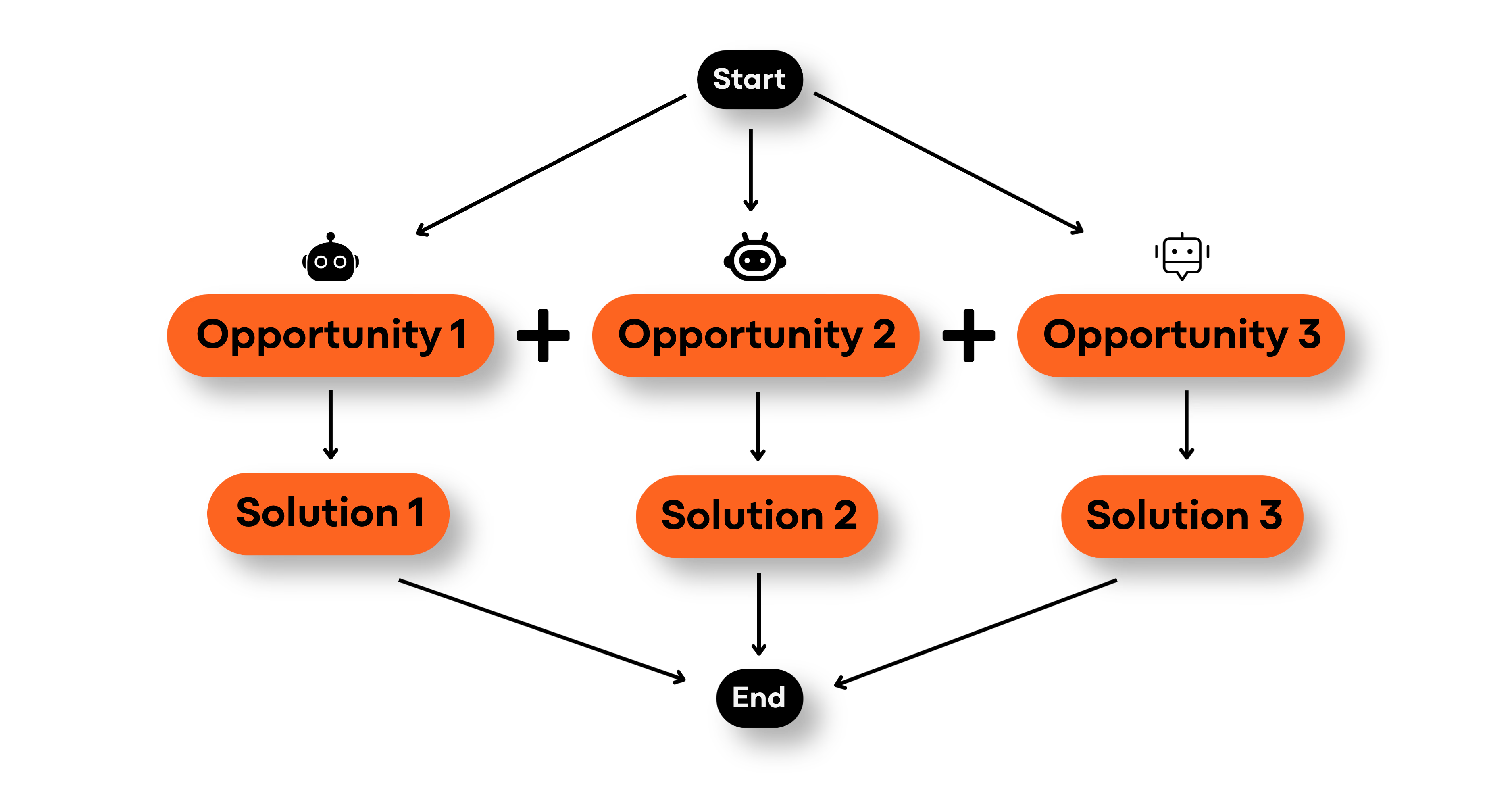
Figure 4. Parallel multi-agent orchestration for ASIC design
This requires isolation.
A workspace can be divided into multiple sandboxed environments, allowing different agents to independently modify and test the design without interfering with one another.
Rather than reviewing every agent interaction individually, the engineer then reviews the resulting batch in its entirety.
This seemingly simple change has significant implications, as the fundamental unit of engineering work begins shifting from one task at a time to a batch of hypotheses evaluated in parallel.
How Agentic AI Transforms IC Power Optimization Flows
Instead of requiring an engineer to manually inspect a large power report, agents can fan out across the design and identify potential optimization opportunities. Those opportunities can then be ranked and presented to the engineer.
From this point, an engineer who previously had to search through hundreds of possibilities may instead receive a curated list of the ten most promising candidates.
The engineer's role changes from discovering every opportunity manually to reviewing, qualifying, and applying expertise to a preprocessed set of possibilities.
Then comes parallel implementation:
Once the engineer approves a group of hypotheses, multiple agents can independently implement them in isolated environments. Clock gating might be explored across several portions of the design simultaneously. Different implementation strategies can also be attempted at the same time.
Instead of spending a day preparing and evaluating one hypothesis, the engineering organization could potentially explore ten or twenty.
More autonomy does not necessarily mean eliminating engineering review. In fact, batch review may become one of the most important interfaces between engineers and autonomous systems.
Consider the power optimization workflow again:
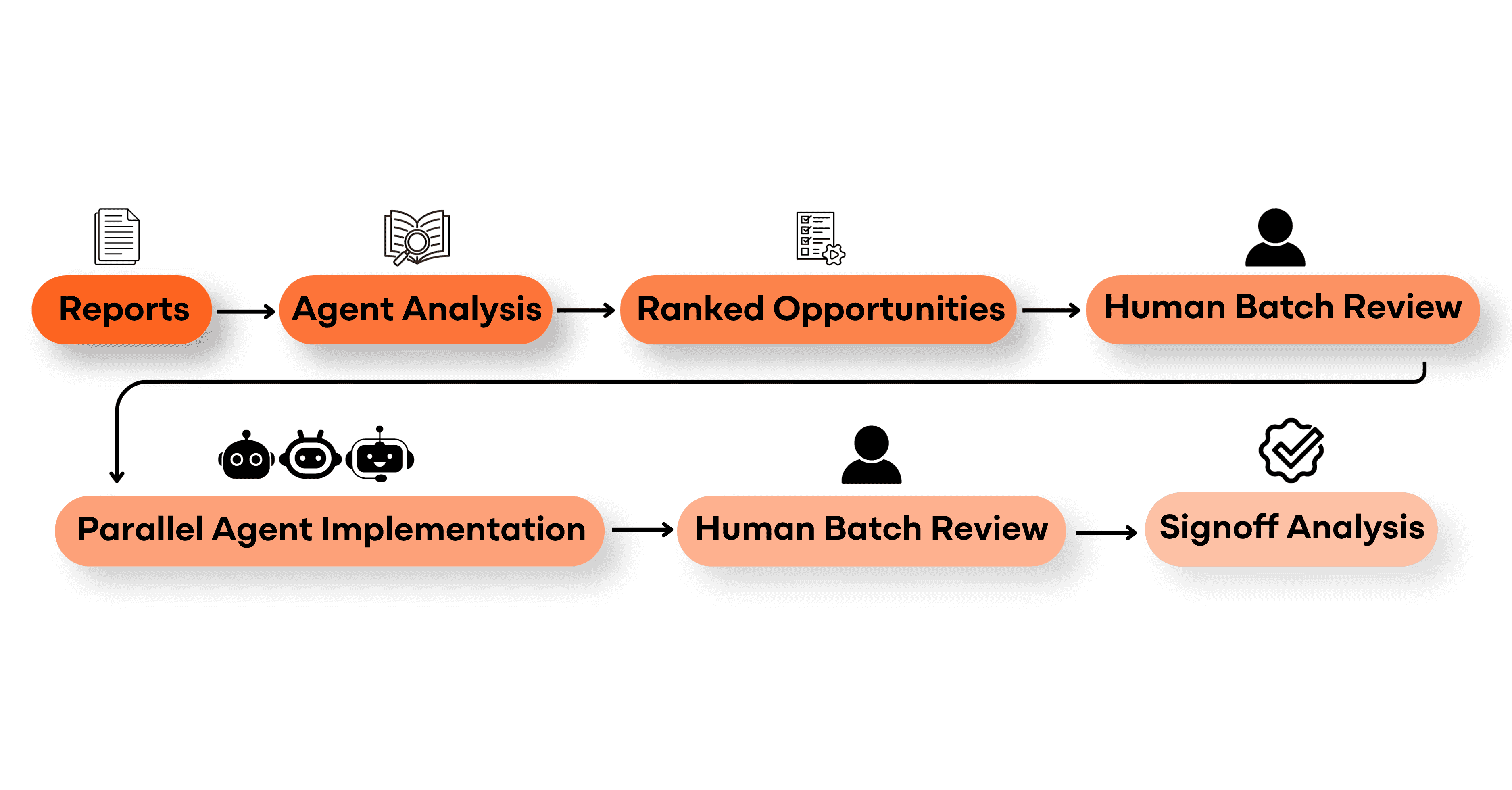
- Agents first analyze the design and generate opportunities. The engineer then performs a batch review.
- Approved opportunities are then dispatched to multiple implementation agents, who perform their work independently and return their results.
- The engineer performs another batch review before expensive signoff-grade analysis is launched.
This leaves the architecture looking like this:
Reports → Agent Analysis → Ranked Opportunities → Human Batch Review → Parallel Agent Implementation → Human Batch Review → Signoff Analysis
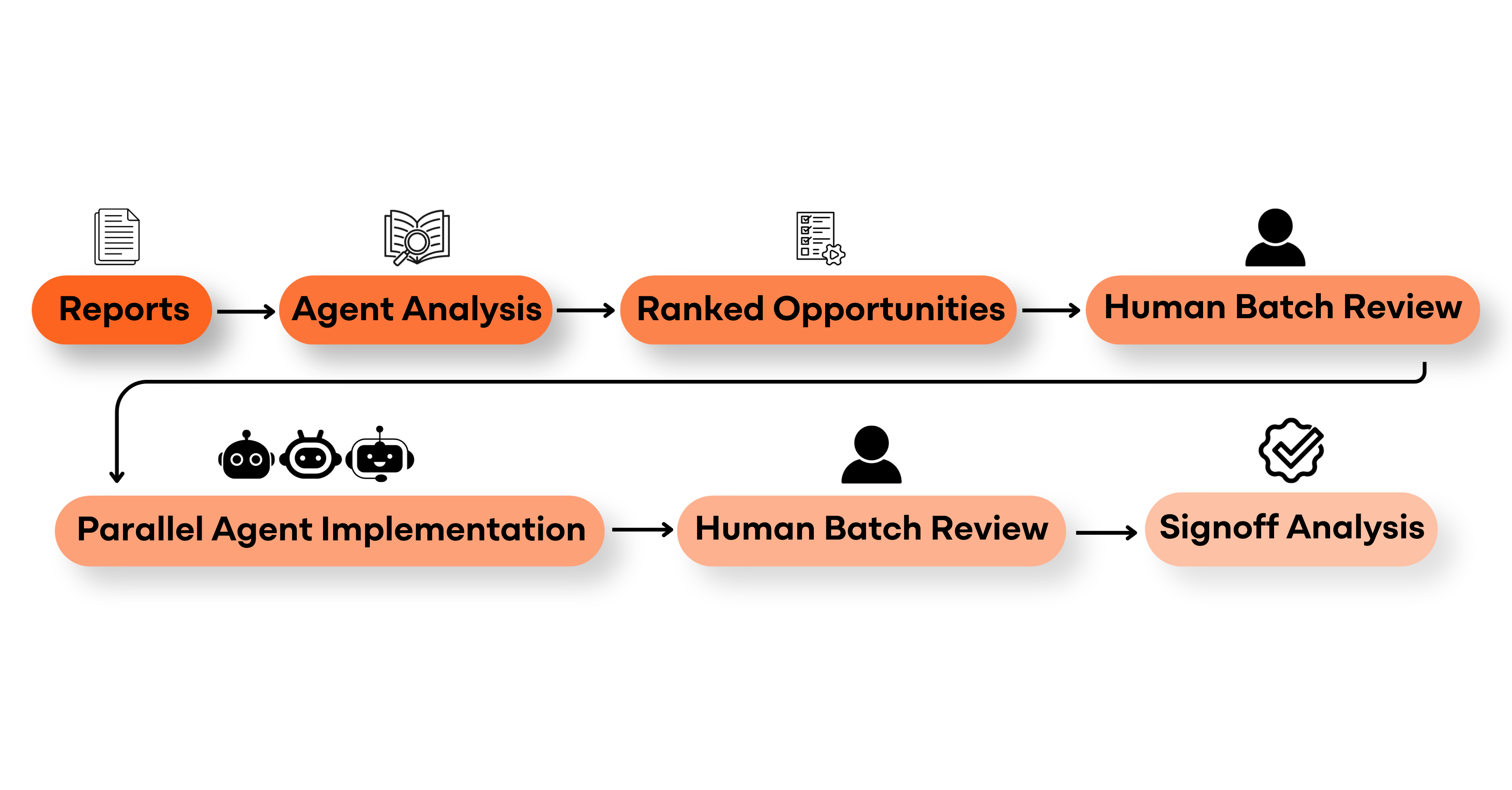
Figure 5. Human-in-the-loop multi-agent workflow for ASIC power optimization
The human remains responsible for judgment, but the nature of that judgment changes.
Instead of spending time assembling information, performing repetitive transformations, and manually setting up every experiment, the engineer can focus on higher-level questions:
- Which opportunities make sense?
- Which results align with expectations?
- Which tradeoffs are acceptable?
- Which hypotheses deserve deeper analysis?
With domain-specific agentic AI, ChipAgents helps engineering teams move from one agent per task to coordinated multi-agent workflows, where productivity gains become structural rather than incremental. Through a unified platform, engineers gain greater leverage over AI without having to build and maintain complex agentic infrastructure in-house. Their role shifts from manually executing every step to directing exploration, evaluating tradeoffs, and applying judgment at the decisions that matter most. Ready to compress your design loop and take the next step toward ASIC autonomy? Book a demo with ChipAgents.